The Parents' Guide to NCAA Eligibility: How to Support Without Sabotaging
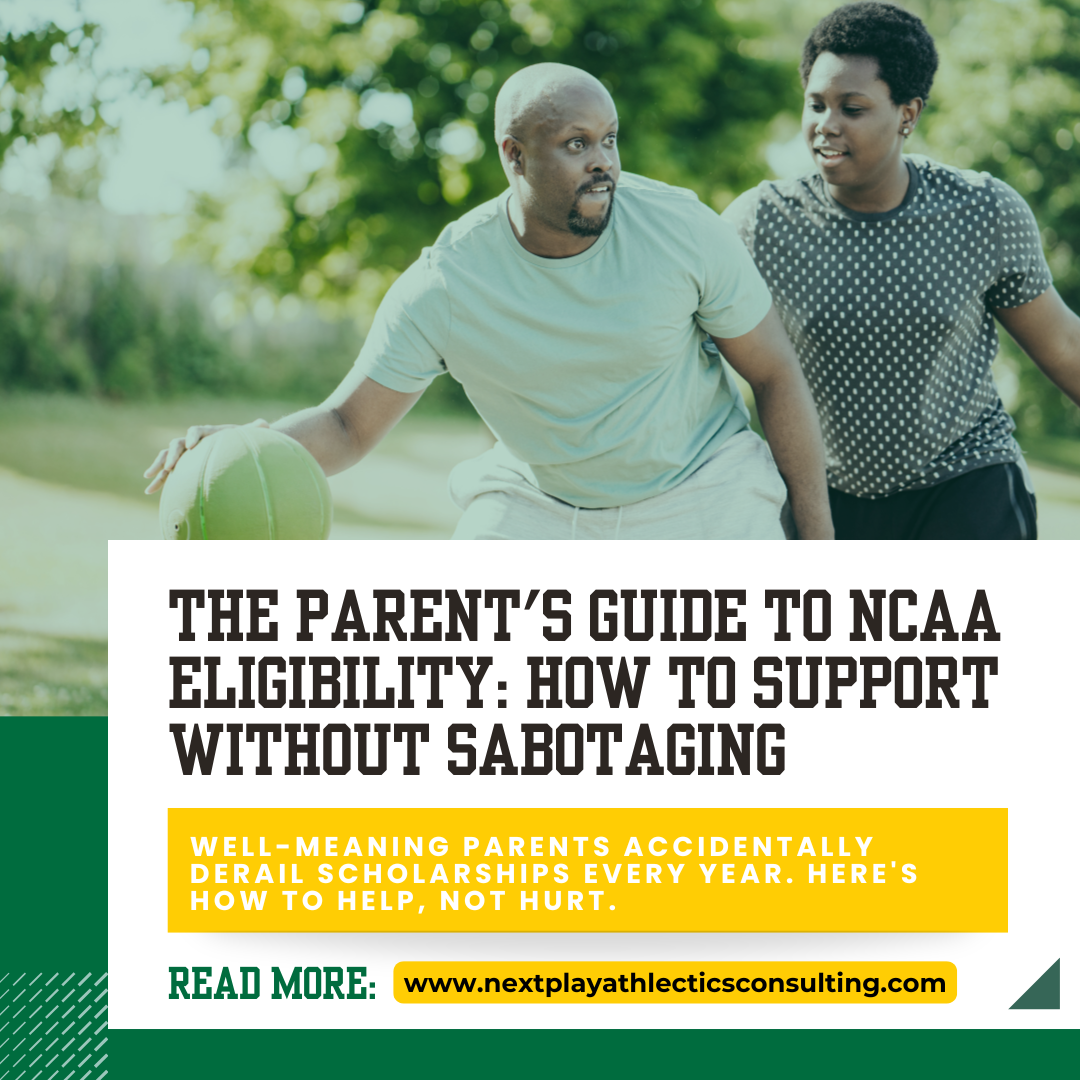
Well-meaning parents accidentally derail scholarships every year. Here's how to help, not hurt.
I need to have a frank conversation with parents. Over the years, I've watched countless well-intentioned parents accidentally damage their child's recruiting prospects or even jeopardize eligibility. The recruiting process is complex, and one wrong move—even if it comes from love—can have serious consequences. Your role as a parent is crucial, but it requires knowing when to step in and when to step back.
What you can do
Parents should absolutely be involved; you're helping your child make one of life's biggest decisions. Handle logistics for unofficial/official visits, research schools, and coordinate travel. Discuss financial aid packages and review the total cost of attendance. Ask coaches about academic support, graduation rates, and program culture during appropriate settings. Help your athlete stay organized with NCAA Eligibility Center requirements. Provide emotional support and serve as a sounding board. Review scholarship offers, award letters, and other documents before signing. Notice what's on that list and what's not. You're the support system, the logistics coordinator, and the financial advisor. You are not the agent, the marketing director, or the spokesperson.
WHAT you absolutely cannot do
Never contact coaches to promote your athlete or negotiate on their behalf, coaches want to hear from the athlete. Don't accept any benefits, gifts, or special treatment from boosters or alumni. Never discuss NIL deals or financial arrangements with coaches directly. Don't post recruiting information or commitments on social media before your athlete officially announces. Never criticize coaches or programs publicly. Don't interfere during official visits or try to dominate conversations. The most common mistake I see is parents who try to be their child's agent. When parents handle all communication, it raises red flags about the athlete's independence and motivation.
Communication and money
Your athlete should send emails, make phone calls, and follow up with coaches. That awkward first email? That's part of their development. You can proofread emails and help craft responses in private, but your athlete needs to press send. Financial conversations are where parents need involvement. You should discuss financial aid packages and review all financial documents together. What you shouldn't do is negotiate with coaches about scholarship amounts. If there's a financial concern, your athlete should bring it up first. Be especially careful about discussing money with boosters or anyone connected to the program who isn't officially designated to handle financial aid discussions
Mental health matters
The recruiting process is stressful. Your athlete will face rejection, uncertainty, and pressure. Be the stable, supportive presence that helps them process disappointment without adding extra pressure. Watch for signs of burnout, anxiety, or depression. The recruiting process shouldn't come at the cost of their mental health or enjoyment of their sport. Remind them that their worth isn't determined by scholarship offers or division levels. Common mistakes to avoid: pushing a child toward a school they're not excited about because it's prestigious, living vicariously through their athlete, badmouthing coaches who didn't recruit your child, posting updates without permission, comparing your child's timeline to peers', and handling all communication instead of letting them lead. Your job is to be your athlete's foundation, not their frontman. Trust that coaches appreciate athletes who show independence and maturity.
Need guidance on navigating the recruiting process as a family?
Book a free consultation with Next Play Athletics Consulting at https://www.nextplayathleticsconsulting.com/ for personalized family support strategies today.