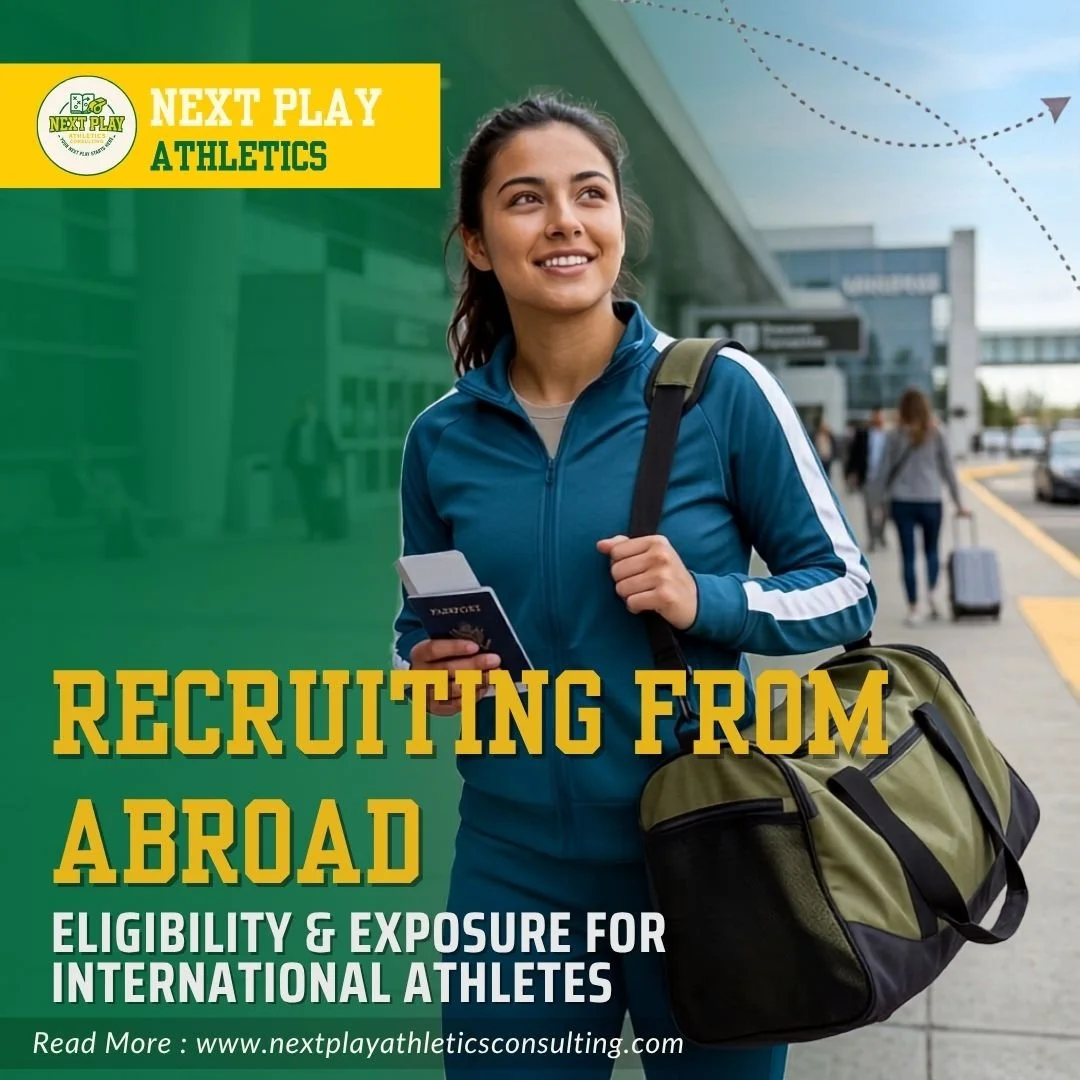
Recruiting From Abroad: Eligibility and Exposure for International Athletes
a path worth understanding
Every year, talented international athletes earn opportunities to compete in American college athletics, and many more could if they understood the process. Recruiting from abroad comes with unique challenges, eligibility rules, academic conversions, time zones, and limited exposure, but none of them are impossible to overcome. With the right plan, your location is not a barrier to being recruited.
ncaa eligibility for international studets
International athletes must meet the same NCAA academic standards as domestic recruits, but the process of proving it is different. Your academic records from your home country must be evaluated and converted to show you meet core-course and grade requirements. Different countries have different education systems, so it is essential to understand early how your coursework will be assessed by the NCAA Eligibility Center.
the amateurism question
Amateurism rules deserve special attention for international athletes. In many countries, the line between amateur and professional sport is different from the United States. Playing for a club that pays expenses, signing certain agreements, or competing alongside professionals can affect your eligibility. Document your athletic history carefully and get guidance before you do anything that could jeopardize your amateur status.
academic records and translations
Your transcripts, diplomas, and certificates will likely need to be translated and submitted in a specific format. Start gathering these documents early, because obtaining official records from a previous school in another country can take time. Accuracy matters: incomplete or improperly translated documents are one of the most common reasons international athletes face delays in clearing eligibility.
english proficiency
Most American colleges require proof of English proficiency for international students, typically through standardized tests. Strong scores not only satisfy admissions requirements but also reassure coaches that you can handle coursework and communicate with teammates and staff. Prepare for these exams in advance, and treat them as seriously as you treat your athletic film, because both open doors.
getting seen from overseas
Exposure is the biggest practical hurdle for international athletes, since coaches cannot easily watch you compete in person. Your highlight film becomes even more important, and so does a clear recruiting profile with verified stats and competition levels. Reaching out directly to coaches, participating in international showcases, and using reputable recruiting platforms can put you in front of programs from thousands of miles away.
building your plan early
International recruiting takes longer, so start sooner. Give yourself extra time for document evaluation, testing, visa considerations, and communication across time zones. Understand the timeline for the NCAA Eligibility Center and college admissions. The international athletes who succeed are almost always the ones who began organizing their eligibility and exposure well ahead of their peers.
Recruiting from outside the United States and unsure where to start?
Book a free consultation with Next Play Athletics Consulting at https://www.nextplayathleticsconsulting.com/ for international eligibility guidance and an exposure plan that gets you seen today.